
Disclaimer: Mladysrecords. This site provides fashion and lifestyle content for informational purposes only.
A backyard memorial garden can be one of the most meaningful projects a person undertakes — and one of the most commonly mishandled. The impulse to act quickly after a loss often leads to rushed decisions: plants chosen for emotion rather than climate, materials that crack within two seasons, layouts that feel right in the moment but become awkward to maintain. The result is a space that gradually loses its dignity rather than deepening in meaning. Getting it right from the start means slowing down long enough to think about what “enduring” actually requires — in material terms, in plant terms, and in personal ones.
Choosing a Site Before Choosing a Style
The single most consequential decision in a memorial garden isn’t which plant to center it around or which stone to use — it’s where the garden sits. Light exposure, drainage, and proximity to tree roots determine whether every subsequent choice succeeds or fails. A poorly drained site will kill shallow-rooted perennials within two winters. A spot under a mature tree canopy limits plants to deep-shade species and creates persistent root competition.
Before selecting a single material, spend at least two full weeks observing how your chosen area behaves. Note where water pools after a half-inch of rain, where afternoon shade falls in midsummer, and how foot traffic currently crosses that part of the yard. These observations prevent the most expensive kind of mistake: a beautifully designed garden built in the wrong location.
The size question also gets underestimated. A 6-by-8-foot dedicated space can hold a meaningful focal point, three to five perennial plants, and a small seating area — and it remains manageable over decades without becoming a maintenance burden. Larger footprints often start strong and then become neglected, which is the opposite of the intention. If the inclination is to go bigger, design for expansion from a defined core rather than building out everything at once.
One practical note on orientation: placing the primary focal point — whether a bench, a planted urn, or a marker — so it faces the direction you’ll most often approach from creates an immediate sense of arrival. It’s a small design decision with a lasting psychological effect.
Materials That Hold Their Meaning Over Time
Memorial gardens fail aesthetically when materials age inconsistently. A granite marker beside a wooden trellis that rots in six years creates visual dissonance, and the replacement process disrupts the space emotionally as well as physically. The most durable memorial gardens are built from materials that age at roughly the same rate or that improve with age.
Natural stone — bluestone, slate, granite, and fieldstone — remains the most reliable hardscape choice because it weathers predictably and requires almost no maintenance beyond occasional cleaning. Poured concrete is less expensive upfront, typically $4 to $8 per square foot compared to $15 to $30 for cut stone, but it cracks more readily through freeze-thaw cycles and can look institutional within a decade if not carefully detailed.
For edging, steel and corten options outperform plastic or aluminum in longevity, holding their shape through soil movement and resisting the kind of creeping displacement that eventually makes a garden’s borders look sloppy. Corten steel develops a warm rust patina that many people find suits a memorial setting particularly well.
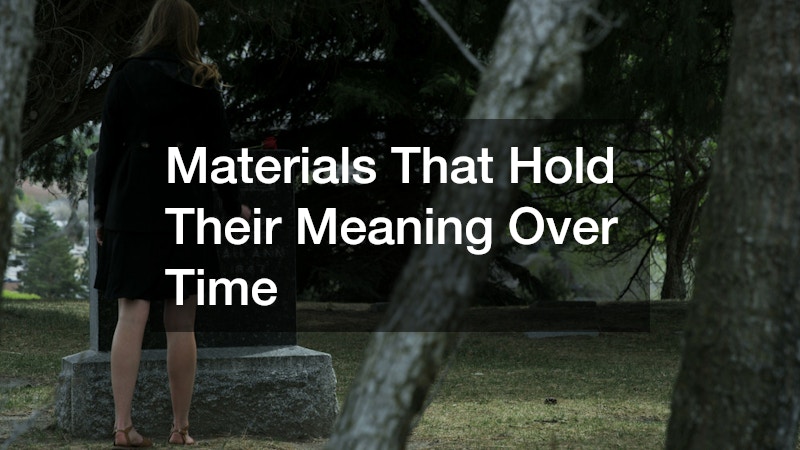
The question of a central marker is where permanence matters most. If the garden is intended to memorialize a specific person, the headstone or engraved stone that serves as the garden’s focal point should be evaluated the same way any architectural element is — for material quality, weather resistance, and legibility over decades, not just initial appearance. Lettering carved into granite, for instance, remains sharp for well over a century under normal outdoor conditions.
Plants That Earn Their Place Through Every Season
Plant selection in memorial gardens tends toward the sentimental, which is understandable but risky from a horticultural standpoint. Roses are among the most commonly chosen plants for memorial settings, and they’re also among the most demanding — requiring annual pruning, regular disease management, and in colder climates, winter protection. Choosing a plant primarily for its symbolic meaning and then struggling to keep it alive creates a quiet stress that undermines the garden’s purpose.
The more practical approach separates the question of meaning from the question of suitability, then finds plants that satisfy both. Lavender, for example, carries longstanding associations with remembrance, tolerates drought once established, requires pruning only once a year, and provides fragrance and color from late spring through midsummer. Ornamental grasses like Karl Foerster feather reed grass hold structure through winter, catching snow and frost in ways that keep the garden visually present even in its quietest months.
A well-chosen mix of three plant layers — a small flowering shrub as the anchor, two or three mid-height perennials for seasonal color, and a low ground cover to suppress weeds — creates a garden that reads as complete without requiring constant intervention. Aim for at least one plant that offers winter interest: seed heads, bark texture, or evergreen foliage. Without it, the garden disappears from November through March, which in many climates is a significant portion of the year.
One comparison worth making directly: native perennials versus non-native cultivars. Native species like black-eyed Susan, coneflower, and wild bergamot typically require less water, fewer soil amendments, and no pesticide management once established. Non-native cultivars may offer more color variety but frequently need supplemental irrigation in their first two to three years and may not self-renew as reliably. For a garden meant to endure with minimal intervention, natives tilt the odds in your favor.
Maintenance Planning as a Design Principle
The gardens that hold their character over ten or twenty years aren’t necessarily the ones built with the most care — they’re the ones designed with realistic maintenance in mind from the start. This is where many memorial gardens quietly fail. A layout with sharp corners requires string-trimming by hand. Gravel paths without proper weed membrane need intervention every spring. Potted plants need watering during any dry stretch longer than five days.
Build the maintenance requirements into the design itself. Use a continuous edging material to eliminate hand-trimming at the border. Install a two-inch layer of hardwood bark mulch over landscape fabric in planting beds — this combination suppresses weed germination effectively for three to four years before it needs refreshing. If the space includes a water feature, choose a recirculating model with a simple pump system rather than anything requiring regular chemical balancing.
Consider who will maintain the garden over time. If the primary caretaker is elderly or may not always have easy physical access, raised bed elements and paths wide enough for a garden cart (at least 30 inches) make a practical difference. Memorial gardens sometimes outlast the people who built them — designing for that possibility isn’t morbid, it’s responsible.
Annual tasks worth scheduling on a calendar: spring cleanup and mulch refresh in late March or early April, a midsummer deadheading pass to extend bloom time, and a fall cutback timed to your first frost date. Three intentional visits per year, done consistently, will keep a well-designed memorial garden in good condition indefinitely.
Starting With Intention, Building for the Long Term
The gardens that endure do so because the people who built them thought beyond the first season. Before purchasing a single plant or stone, write down three concrete answers: what conditions this site actually presents, which materials can realistically be maintained, and who will care for the space in five or ten years. Those answers will eliminate more bad decisions than any design guide can. A memorial garden should deepen in meaning as it matures — that only happens when the structure beneath it was built to last.
